I wanted to take some time to talk about something I do often: traveling by airplane. As a doctoral candidate studying in a helping profession with a focus on prevention, intervention, and advocacy, I have learned a lot about airlines, airports, and the many areas where accessibility still falls short.
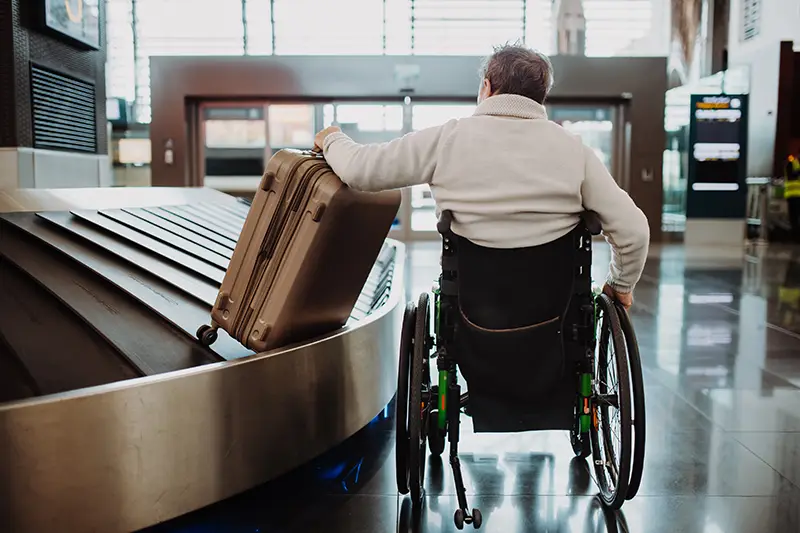
Air travel looks very different for wheelchair users compared to able-bodied travelers, and it comes with many fears. From the moment a wheelchair user enters the airport, there are already challenges ahead. Most airlines have a designated area for wheelchair users to check in near the regular check-in line, although some airports still do not.
At check-in, you have the worker your ID and they pull up your flight information. They print your boarding pass and attach a wheelchair tag. This tag includes details such as whether it is a manual or power wheelchair, the make, model, color, design, and whether any damage existed before the flight.
After answering a few questions, you head to TSA. This is where a new set of concerns begins. Do you have TSA Cares? Are you traveling alone? Can you walk through the scanner, or will you need a pat-down? If you cannot go through the scanner, you must wait for a TSA agent of the same gender to become available to conduct a pat-down. This can take a significant amount of time depending on the airport and staffing levels. The pat-down is very close and personal, and wheelchair users are offered the option of a public or private screening. While it can feel invasive, it is part of maintaining the safety and security of the airport, airlines, and passengers.
For me, this process can be even more complex. I travel with several medications that exceed TSA's normal liquid limits. This is allowed, but TSA must inspect them. That usually means they remove the liquids from my bag and test them. I have a central line and do daily IV fluids along with other IV medications. My IV bags are often removed and placed into a machine that tests the liquid. The machine is not designed specifically for medical products. It is the same device used to test other liquids, like baby bottles.
During this process, I often have to advocate strongly for myself. I try to explain the importance of keeping my medical supplies as sterile as possible. While my luggage itself is not sterile, the items inside are only handled by the pharmacy and me. Some TSA agents will test one bag that I later discard, while others test every bag, which increases the risk of contamination. Once this process is complete, I head to my gate. The fast pace and high energy of airports often cause me anxiety, so I try to plan for every possible issue ahead of time.
At the gate, the airline desk provides another wheelchair tag and asks whether I will need an aisle chair or assistance transferring to my seat. I personally use an aisle chair, but can transfer independently to my assigned seat on the plane. At that point, my wheelchair is taken to be stored under the aircraft. This is when the worry really sets in. My chest feels heavy because I know how much I rely on my wheelchair. I always worry about whether it will be returned in the same condition I handed it over. If a custom wheelchair is damaged, it can take months to replace.
I choose a window seat to help avoid my legs being bumped by other passengers, which helps to manage my chronic pain. Once I'm seated, I keep all of my necessary medications under the seat in front of me for easy access. Having everything within reach helps to reduce my anxiety because I do not need to rely on the flight attendants for assistance. My independence makes a big difference in keeping me calm during the flight.
Despite the fear and exhaustion that often come with air travel as a wheelchair user, I continue to fly. Access to education, advocacy spaces, family, and opportunity should never be optional.
Every trip reminds me why this work matters. Accessibility is not a luxury or a special request. It is a civil right that requires accountability, proper training, and meaningful change across the airline industry.
About the author
Gloria Stephens is a disability advocate, adjunct professor, and doctoral candidate whose work is deeply informed by her lived experience with arachnoiditis, incomplete spinal cord injury, and autoimmune autonomic neuropathy. As a wheelchair user, Gloria has a desire to improve accessibility, dignity, and disability representation across healthcare, transportation, and community spaces.
She is the founder of Disabled With Dignity LLC, where she blends education, advocacy, and storytelling to uplift disabled voices. Gloria also teaches Masters and Bachelors Human Services courses. Her research focuses on improving airline accessibility for wheelchair users, continuing her mission to create a world where all people can navigate life with equity, respect, and independence.
Gloria's ride is a QUICKIE Nitrum and Empulse M90.
Most of the stories here on LiveQuickie.com were submitted by readers. Do you have a story to tell? We'd love to hear it. Submit your story here.