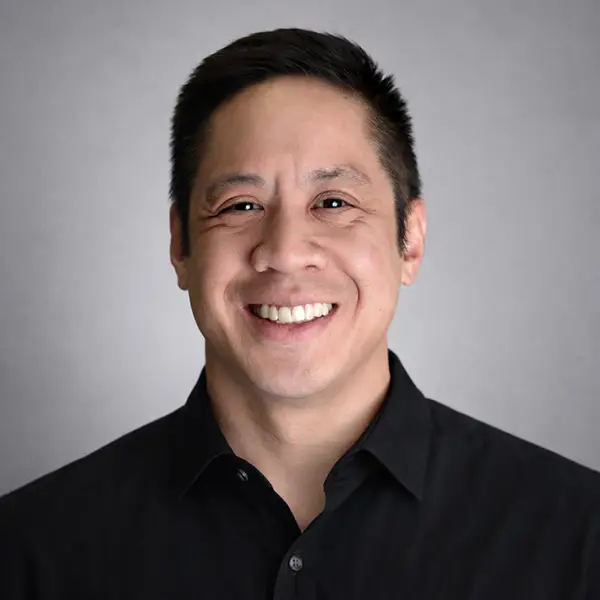
In an industry that often equates physical endurance with creative value, John Floresca is reshaping what that assumption looks like. As part of the Emmy-nominated camera department at The Daily Show and most recently as Director of Photography on Back to the Dark Ages, Floresca brings not just technical precision, but lived experience, adaptability, and an instinct for storytelling that elevates every frame he touches.
A Scene That Changed Everything
Floresca's journey into disability came suddenly. In June 2019, while surfing in Hawaii, he experienced surfer's myelopathy after hyperextending his lower back while pushing down on his board. In an instant, his life – and career – changed.
Before his injury, Floresca had already built a strong foundation as a union camera assistant working on major motion pictures and a full-time gig with Saturday Night Live. Returning to set life afterward required both mental and logistical recalibration.
"At the beginning, I had to tune out the way people looked at me," he explained. "I felt like I had to work harder to pull my weight. But then I realized I'm here because of my skill, my experience, my reliability, and my positivity."
One of the biggest shifts Floresca had to make post-injury wasn't about camera technique – it was about planning.
"I had to do my diligence to plan out the accessibility of the set," he said. "Take the pride out of it and ask for help when needed."
That shift, from proving himself to owning his place, marked a turning point not just in his career, but in how he approached filmmaking altogether.
What Back to the Dark Ages Is All About
Back to the Dark Ages is a dramedy that uses humor and magical realism to explore a deeply contemporary issue: what is means to live in a world that has "moved on" from COVID, even as many people continue to deal with its long-term effects.
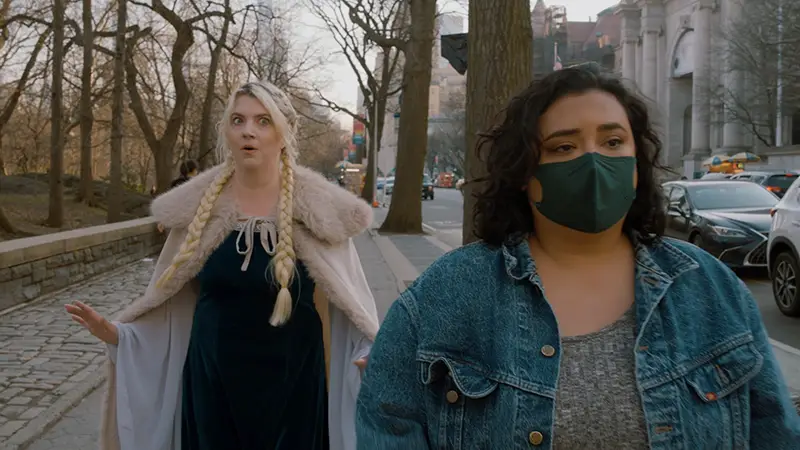
The story follows Christina, a woman with Long COVID navigating modern-day New York, when she encounters Wilhelmina – a medieval ghost who appears after being summoned from a painting. Through their unlikely connection, the film juxtaposes past and present, isolation and community, and the tension between survival and being truly seen.
It's funny, surreal, and emotionally powerful – and Floresca's cinematography plays a crucial role in grounding that tonal balance.
Disabled-Led Sets = Better Sets
Floresca and director Anna Pakman, also a wheelchair user, have now navigated the Easterseals Disability Film Challenge together multiple times, including on Emergency Plan, where Floresca also served as Director of Photography. That film went on to win the Best Awareness Campaign Award at the Easterseals Disability Film Challenge last year – a testament to both its message and its execution.
So, what happens when a set is led by wheelchair users?
"Honestly, it made the set more efficient," Floresca said. "We communicated better, we prepped better, and everything had more intention behind it." Both projects were tight with few wasted moves – not because of limitation, but because of foresight, especially important in the context of a film challenge where there are only five days to create a film from start to fully edited finish.
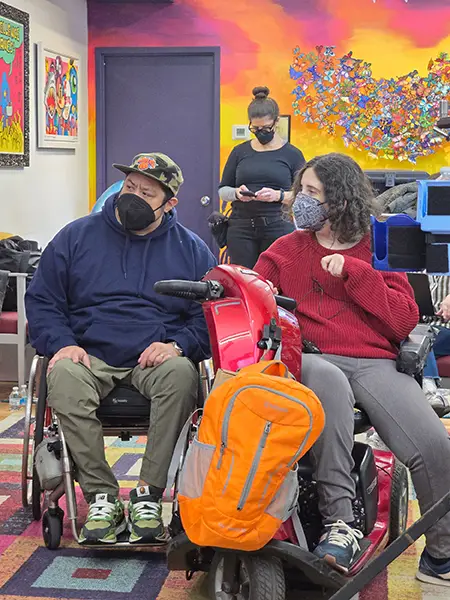
The only real challenge? Space.
"We had to make room – for mobility devices, for gear like the Steadicam. But once we planned for that, it wasn't an issue."
Filmmaking Without Limits
For Floresca, filmmaking isn't about proving anything to anyone.
"It's just how I show up," he said.
That mindset is key. His presence on set isn't framed as inspirational – it's normalized. He's a high-level creative professional who happens to use a wheelchair, not the other way around.
Still, he recognizes the broader impact.
"If people see that and it shifts how they think about what's possible, that means everything to me."
And that shift matters – not just for audiences, but for the next generation of disabled creatives who may not yet see themselves reflected behind the camera.
Advice for the Next Generation
For young disabled creatives wondering if there's a place for them in film, Floresca's advice is direct: "If you've got a good support system around you, the world is yours. Don't let a 'no' stop you. Your perspective is yours for a reason."
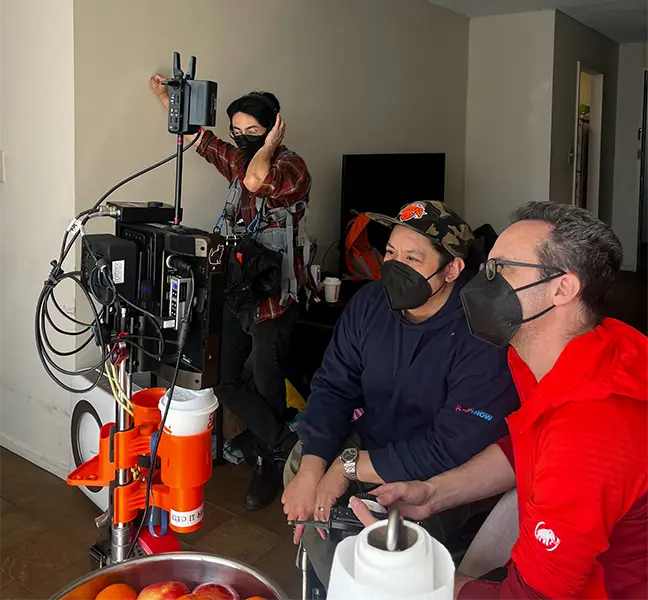
He emphasized that while the industry is physically demanding – especially in entry-level roles – there are multiple pathways in.
Editing, directing, and script supervising are all more adaptable entry points. But more importantly, it's about finding your lane and finding a team that understands how you work.
"It may take a different path," he said, "but it's still possible."
Survival Kit: Film Challenge Edition
When asked what he can't survive a film challenge week without, Floresca keeps it simple: a storyboard, his phone, and chocolate.
Dreaming Bigger – Like, Space Bigger
If given an unlimited budget and an all-disabled crew, Floresca doesn't think small.
Tom Cruise canceled his space movie," he joked. "So, I guess I've got a shot now – first disability-led film in space. No gravity, plenty of room...finally, a set with no accessibility issues."
It's funny, but also revealing. His imagination isn't constrained by the barriers that exist today. It's already operating beyond them.
About the author
Anna Pakman is an award-winning New York City-based director, writer, producer, and advocate for disability inclusion in media. She is a two-time winner of the Easterseals Disability Film Challenge and her work has screened at film festivals around the world. In addition to her experience as an independent filmmaker, Anna has extensive professional experience as a marketing executive overseeing digital content creation for major brands including I LOVE NY, Oxygen/NBCU ("The Glee Project," "Bad Girls Club," "Tori & Dean"), and Current TV.
Most of the stories here on LiveQuickie.com were submitted by readers. Do you have a story to tell? We'd love to hear it. Submit your story here.